| Photo of the week October 6 |
|
|
Where did we take it?
|
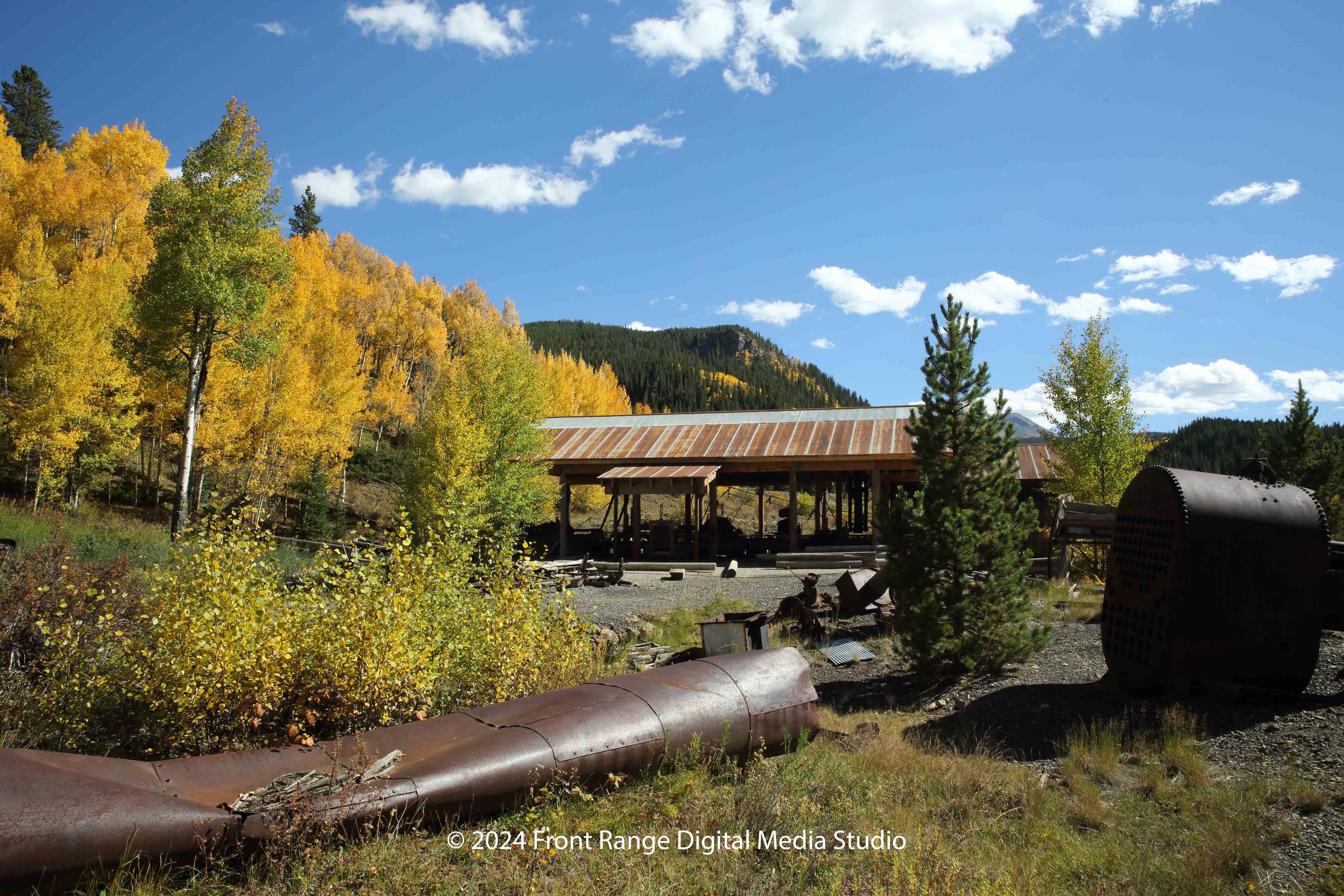
As fall colors start, let's visit the mountainside just outside
Breckenridge, Colorado.
|
|
What is the subject?
|
A long abandoned sawmill in a setting of aspen trees with their leaves in brilliant gold.
|
| Details, please? |
Canon EOS 5D Mark III with 24-70mm lens at 24mm, f/20, 1/80 sec, ISO 400 |
|
How did we get it?
|
While "leaf peeping" outside Breckenridge, we came across a preserved sawmill. This
provides an interesting foreground for fall leaf pictures.
|
| What's so special about it? |
Fall colors in Colorado are spectacular. To make the picture interesting,
the remains of a sawmill are in the foreground.
As the mining boom was taking place, people would buy "kits" that included
a boiler, a steam engine, and saw to make lumber out of trees. These units were
"portable," and the owner could pack the whole thing up onto a few wagons
and move it to the next location. It's a fascinating part of the history of
the west.
|
| Photo of the week September 1 |
|
|
Where did we take it?
|
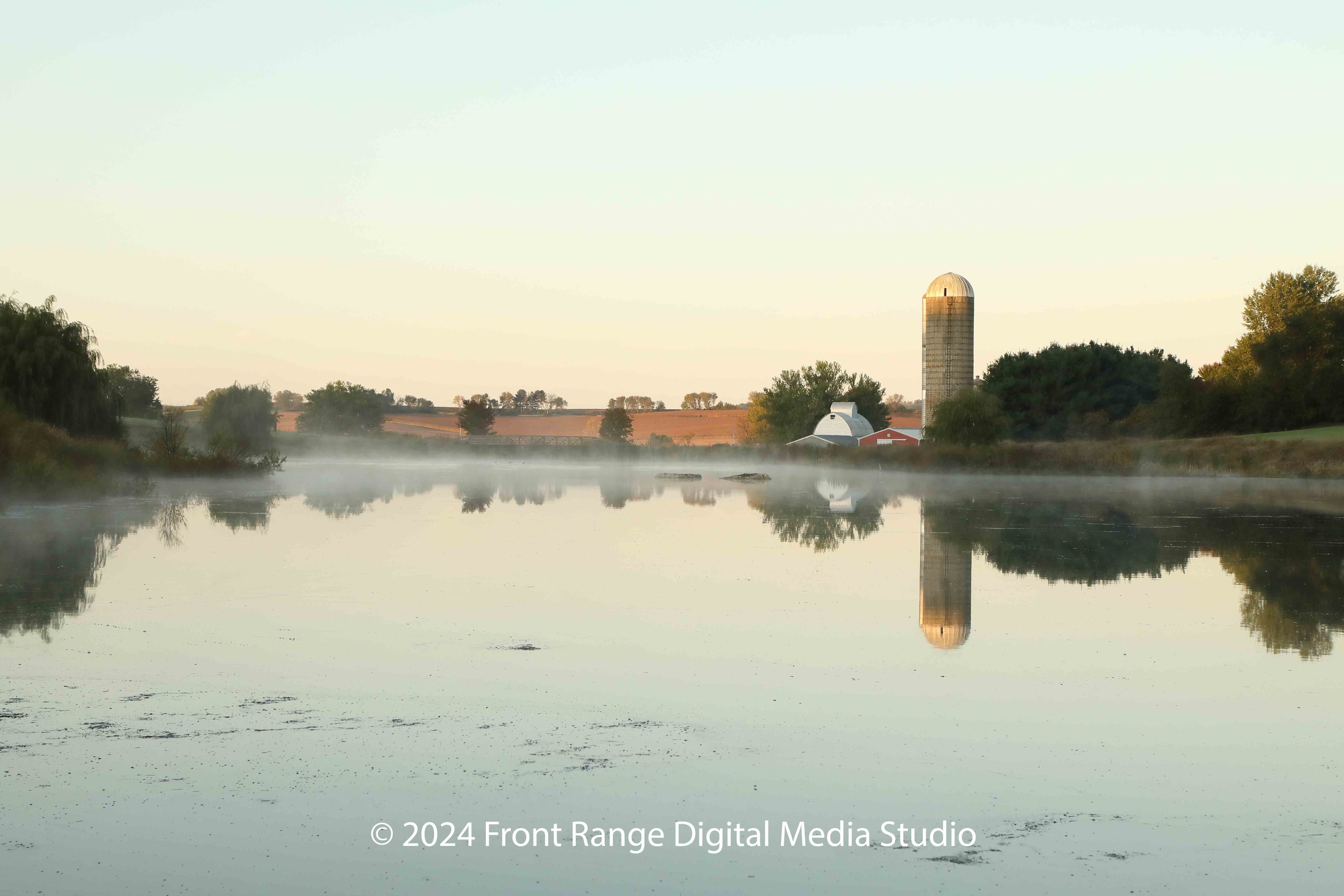
A farm near Verona, Wisconsin
|
|
What is the subject?
|
A serene pond reflecting a silo and farm buildings
|
| Details, please? |
Canon EOS 5D Mark 4 with 24-70mm lens at 67mm, f/9, 1/320 sec, ISO 400 |
|
How did we get it?
|
The trick here is to get out early on a day with calm winds. In this case
the calm winds also led to a wisp of fog settled across the pond. An F stop
of f9 gives good depth of field so that most everything in the frame is in focus.
|
| What's so special about it? |
The pond and farm evoke a feeling of serenity. The virtually smooth pond
and soft light from the just-risen sun make this a beautiful photo.
|
| Photo of the week August 4 |
|
|
Where did we take it?
|
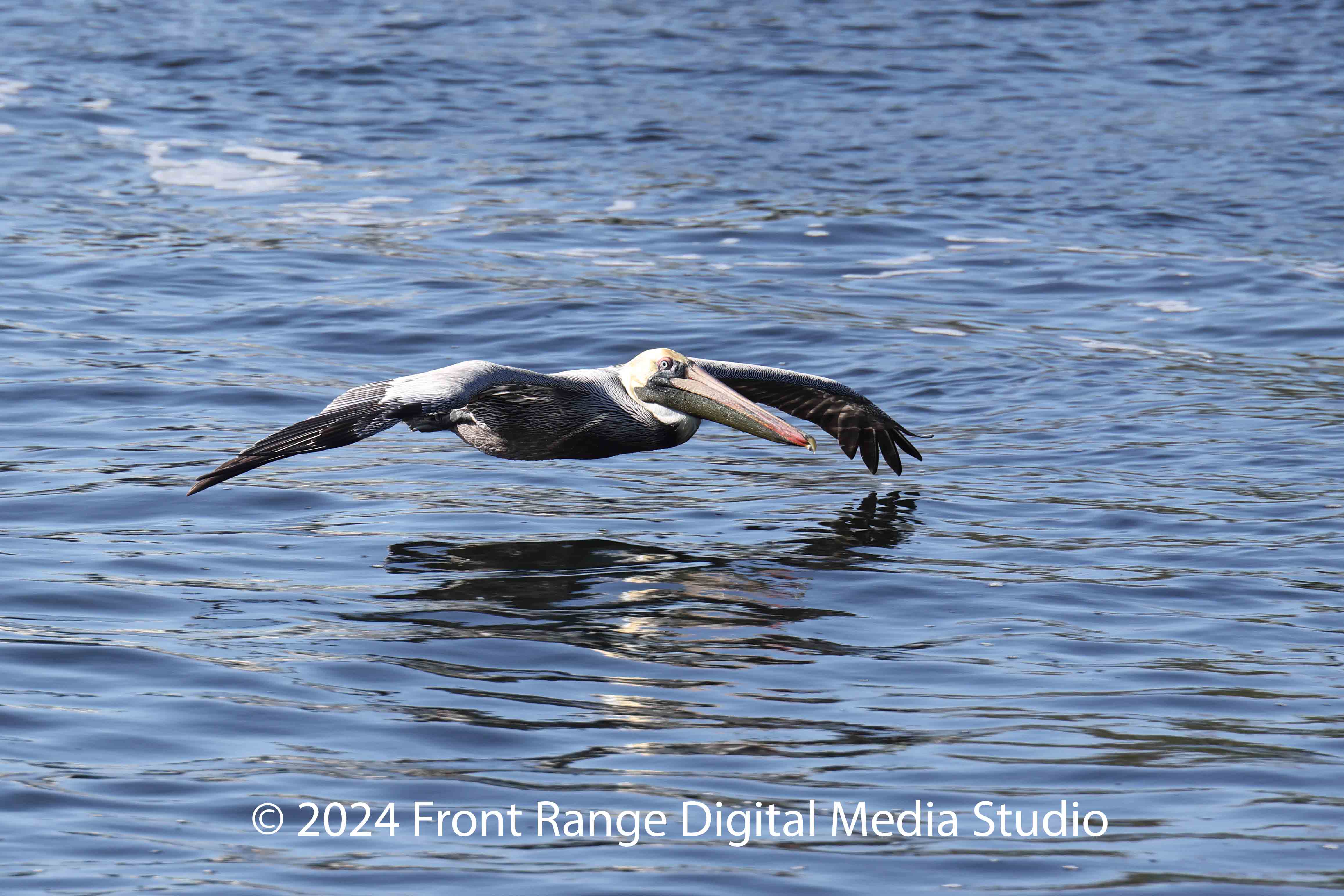
Tarpon Springs, Florida, at an area known as the Sponge Docks.
|
|
What is the subject?
|
A pelican gliding just inches above the water.
|
| Details, please? |
Canon EOS R5 with 100-400mm lens at 240mm, f/9, 1/800 sec, ISO 400 |
|
How did we get it?
|
The Sponge Docks in Tarpon Springs, Florida, is a tourist area with a walkway along the waterfront.
Pelicans frequent the area. Just show up with camera and push button! Seriously, the trick here
is to make sure the camera is in continuous focus mode (Canon calls it Servo mode) and practice
at keeping the subject framed.
|
| What's so special about it? |
We're amazed by how gracefully these bird can glide just inches above the water. We also
love getting pictures close enough to see well illuminated eyes as the pelican has here.
|
| Photo of the week July 18 |
|
|
Where did we take it?
|
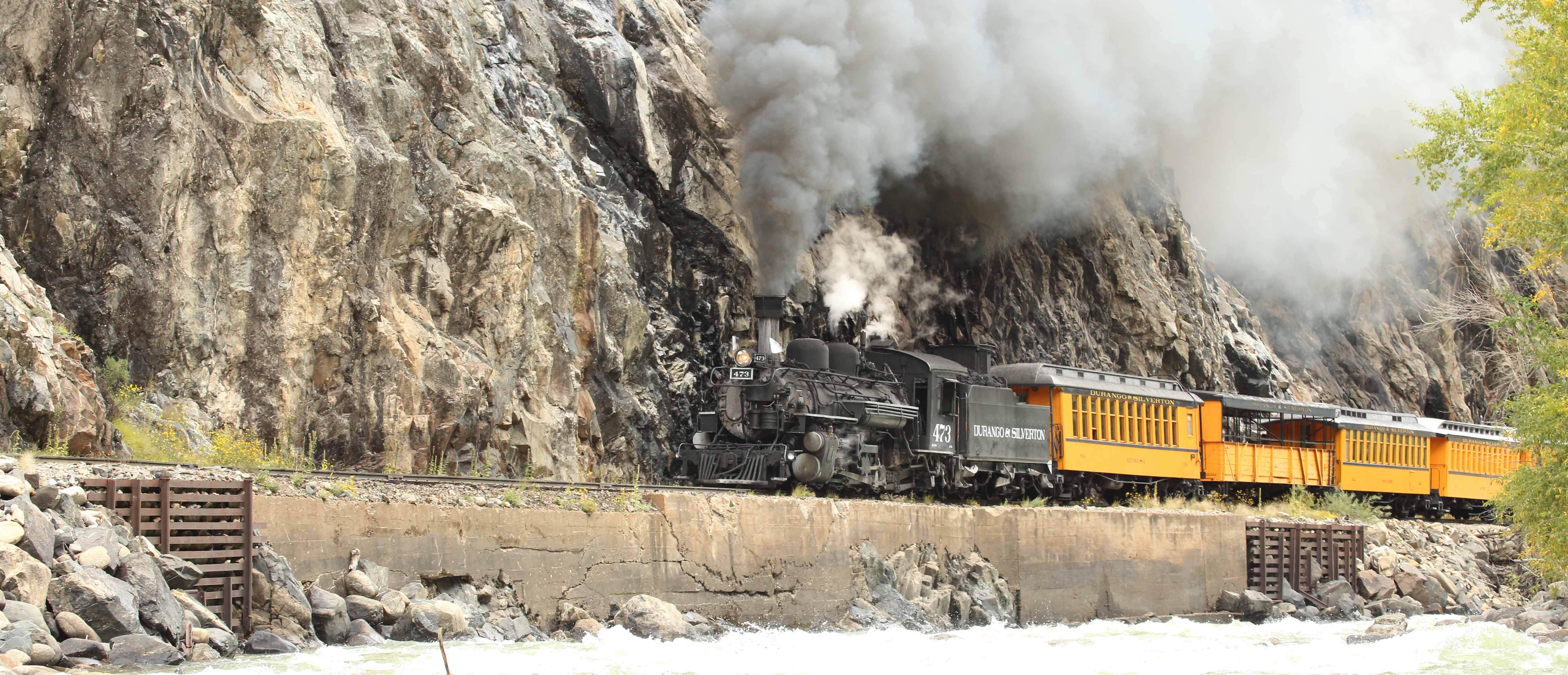
Along the Animas River on the Durango and Silverton Narrow Gauge Railroad.
|
|
What is the subject?
|
A tourist passenger train working its way uphill along white water.
|
| Details, please? |
Canon EOS 6D with 100-400mm lens at 100mm, f/8, 1/125 sec, ISO 1600 |
|
How did we get it?
|
Durango and Silverton usually runs two "photographer specials," one in fall, the other in winter. The train runs most of it's
route to Silverton, with five or six stops along the way. The train stops, lets the photographers off, backs up, and
runs by the spot (usually twice) allowing photographers and videographers to film it. This was one of those occasions.
|
| What's so special about it? |
Since we highlighted a trip on the Cumbres and Toltec railroad last week, we'll join in the
Union Pacific Steam Program's
nationwide tour theme with the other premiere Colorado historic railroad, the Durango and Silverton.
This is the other end of the line from the Cumbres and Toltec. The Rio Grand built a railroad line from Alamosa to Durango,
then extended it to Silverton. This line actually had the last steam power operated by a major railroad, and used steam up until
1970 primarily to deliver oil drilling materials to the Farmington, NM area. The Rio Grand abandoned most of the route in 1970,
but kept the Durango and Silverton for another decade as a tourist line. In 1980, the Rio Grand exited the business, selling
the DSNGRR to private investors. It continues to operate today, and we highly recommend both lines.
We printed this in a large, wide format, as a beautiful piece of wall art.
|
| Photo of the week June 16 |
|
|
Where did we take it?
|
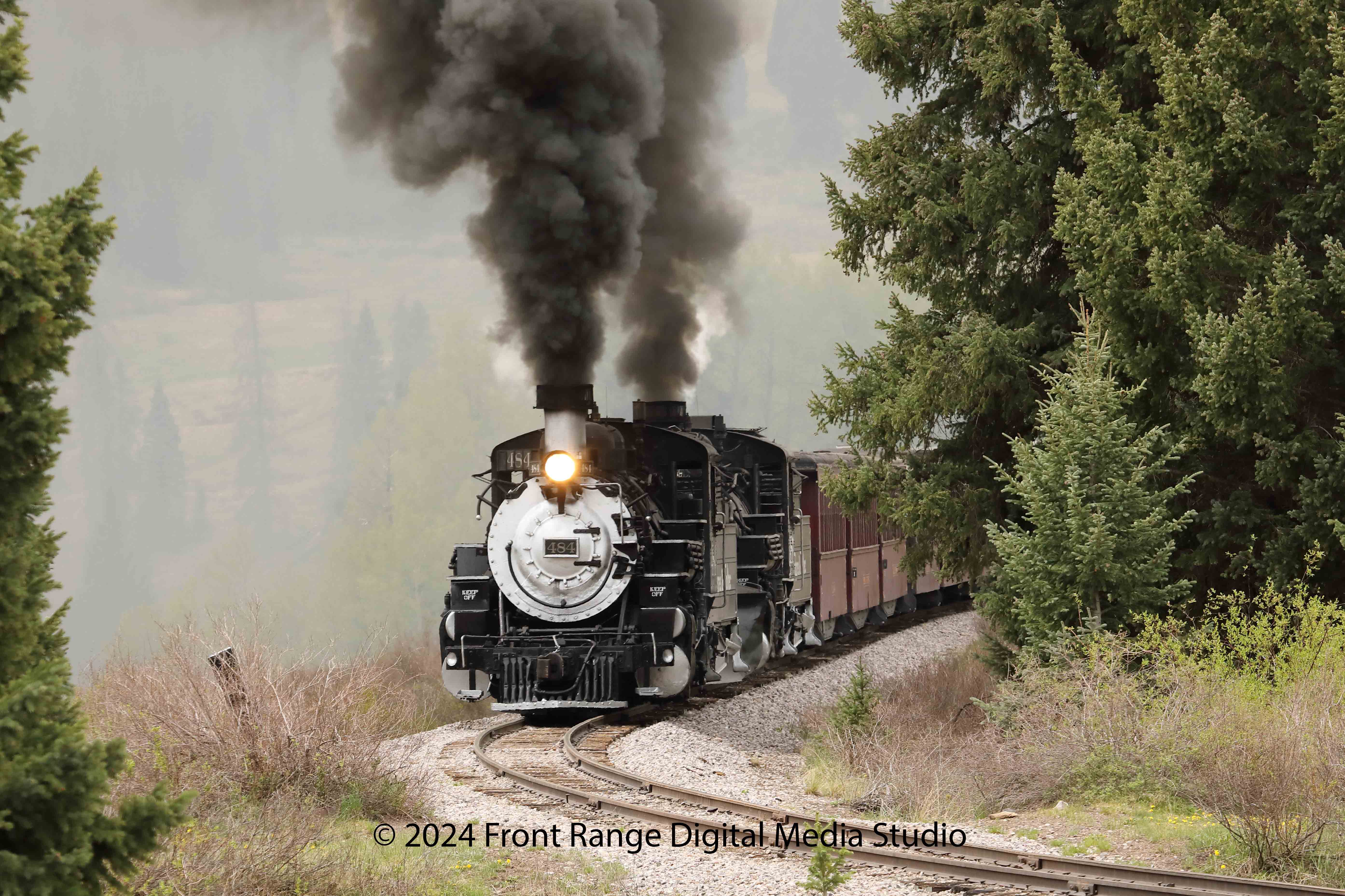
Along the tracks at a grade crossing on the Cumbres and Toltec Scenic Railroad.
|
|
What is the subject?
|
Two steam locomotives working hard on a narrow gauge railroad.
|
| Details, please? |
Canon EOS 5D Mark IV with 100-400mm lens at 235mm, f/9, 1/800 sec, ISO 800 |
|
How did we get it?
|
We learned that Cumbres and Toltec Scenic Railroad would be running a "double header" (a train
with two locomotives) on opening day. We staked out several grade crossings along Highway 17 in southern
Colorado and northern New Mexico, and waited for the train to be in optimal position.
|
| What's so special about it? |
To coincide with the Union Pacific Steam Program's
nationwide tour with their "big boy" steamer, we thought this would be a good opportunity to showcase
the railroads of yesteryear. The Cumbres and Toltec railroad, a preservation effort created by the states
of Colorado and New Mexico, operates steam locomotives and trains between Chama, New Mexico and
Antonito, Colorado. The locomotives are typically from the 1920s, and the passenger cars are even older. This particular
photo captures a double header near a grade crossing. Both engines are working hard to climb the grade towards
Cumbres Pass, a stunning illustration of 1920s steam power.
|
| Photo of the week May 18 |
|
|
Where did we take it?
|
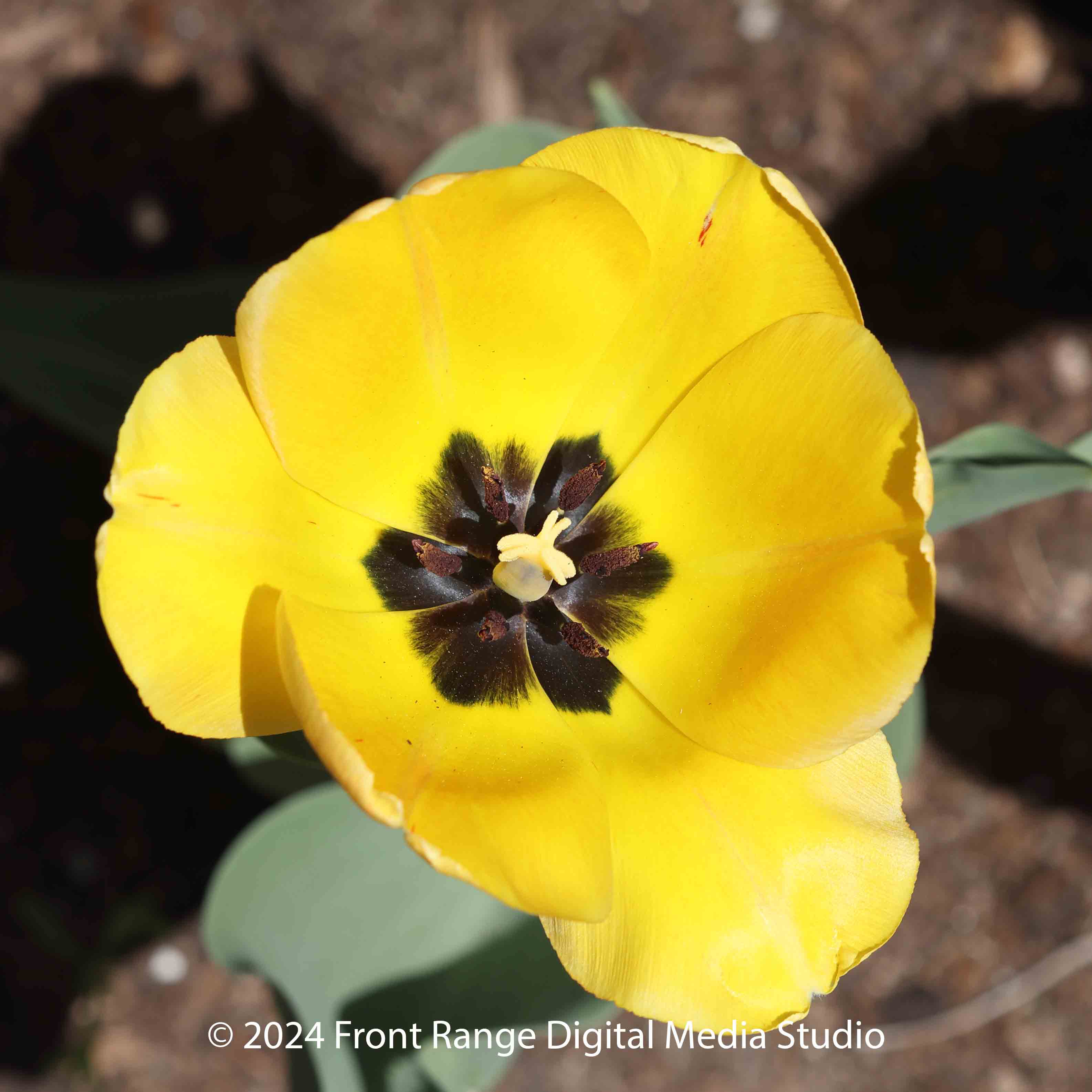
Denver Botanic Gardens
|
|
What is the subject?
|
A close up of a yellow flower.
|
| Details, please? |
Canon R5 with 100mm macro lens, f/7.1, 1/1250 sec, ISO 400 |
|
How did we get it?
|
Denver Botanic Gardens has a wide variety of flowers, especially in spring. A Mother's day
visit yielded us this photograph, and a number of others.
|
| What's so special about it? |
It is a beautiful flower. We made this a square picture as we like odd size pictures.
This photo, particularly printed in a large format, would brighten up a room. A large print
on glass, acrylic, or metal is stunning! Contact us for
large printing options and pricing.
|
| Photo of the week April 14 |
|
|
Where did we take it?
|
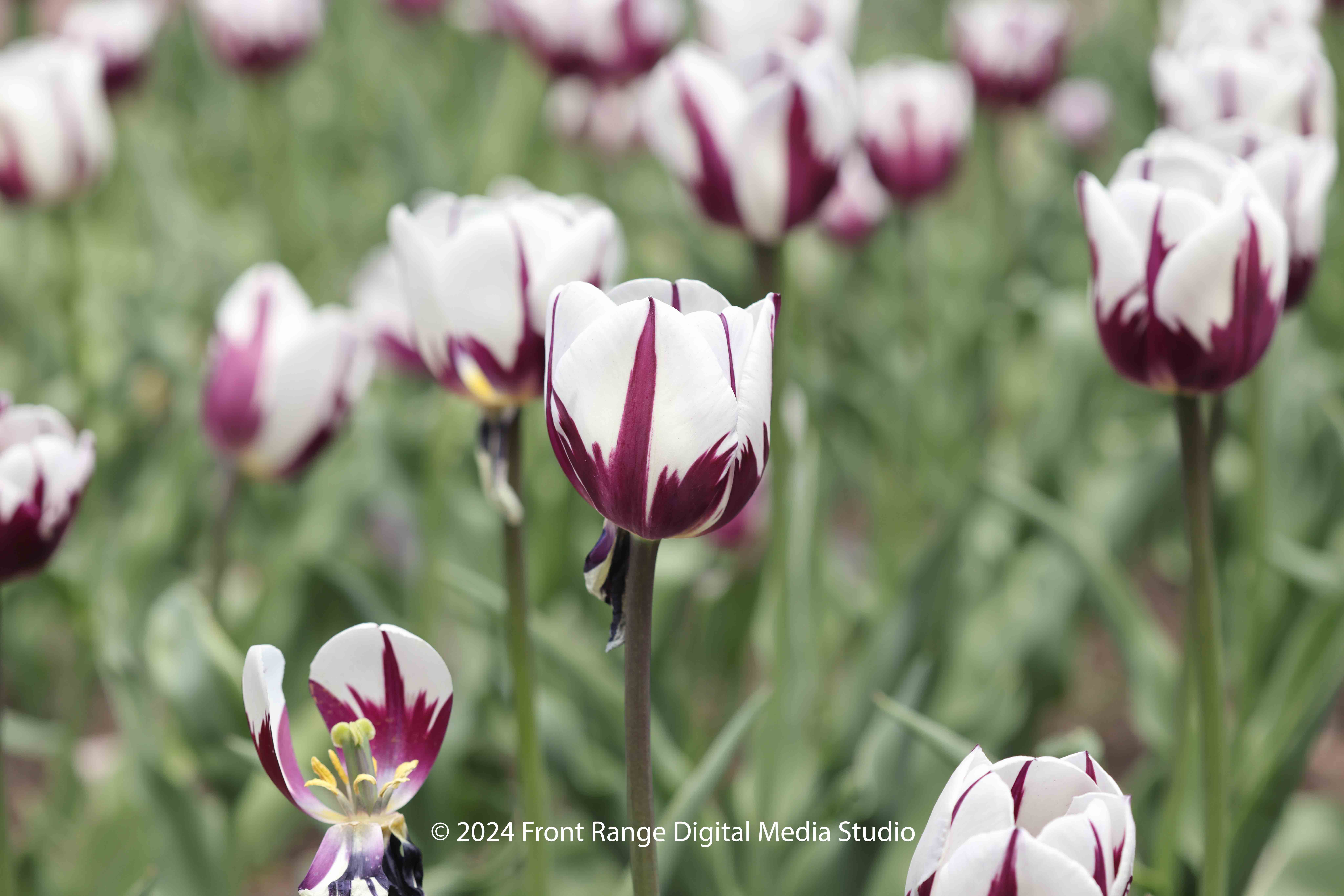
Pearl Street in Boulder, Colorado
|
|
What is the subject?
|
A box full of tulips.
|
| Details, please? |
Canon R5 with 100mm macro lens, f/5, 1/800 sec, ISO 400 |
|
How did we get it?
|
A macro lens and a spring flower planting, getting down to the level of the flowers to capture more
in the background. We used a large aperture to keep the foreground flower in focus but give us bokeh for the
background flowers.
|
| What's so special about it? |
For spring, let's look at some spring flowers! The Pearl Street Mall in Boulder, Colorado, plants numerous
flower boxes with various tulips and other spring flowers. The one flower in focus with the remaining
flowers blurred makes the subject flower seem to pop.
|
| Photo of the week March 16 |

|
|
Where did we take it?
|
Blackpoint Wildlife Drive, Merritt Island National Wildlife Refuge, Florida
|
|
What is the subject?
|
Two turtles reflecting in a pond.
|
| Details, please? |
Canon Powershot SX70, lens at 221mm, f/6.3, 1/320 sec, ISO 100 |
|
How did we get it?
|
Repitition and a bit of luck. We frequent the wildlife drive, and frequently find
still water and different creatures.
|
| What's so special about it? |
The still water and two turtles make for an interesting picture.
|
| Photo of the week January 27 |
|
|
Where did we take it?
|
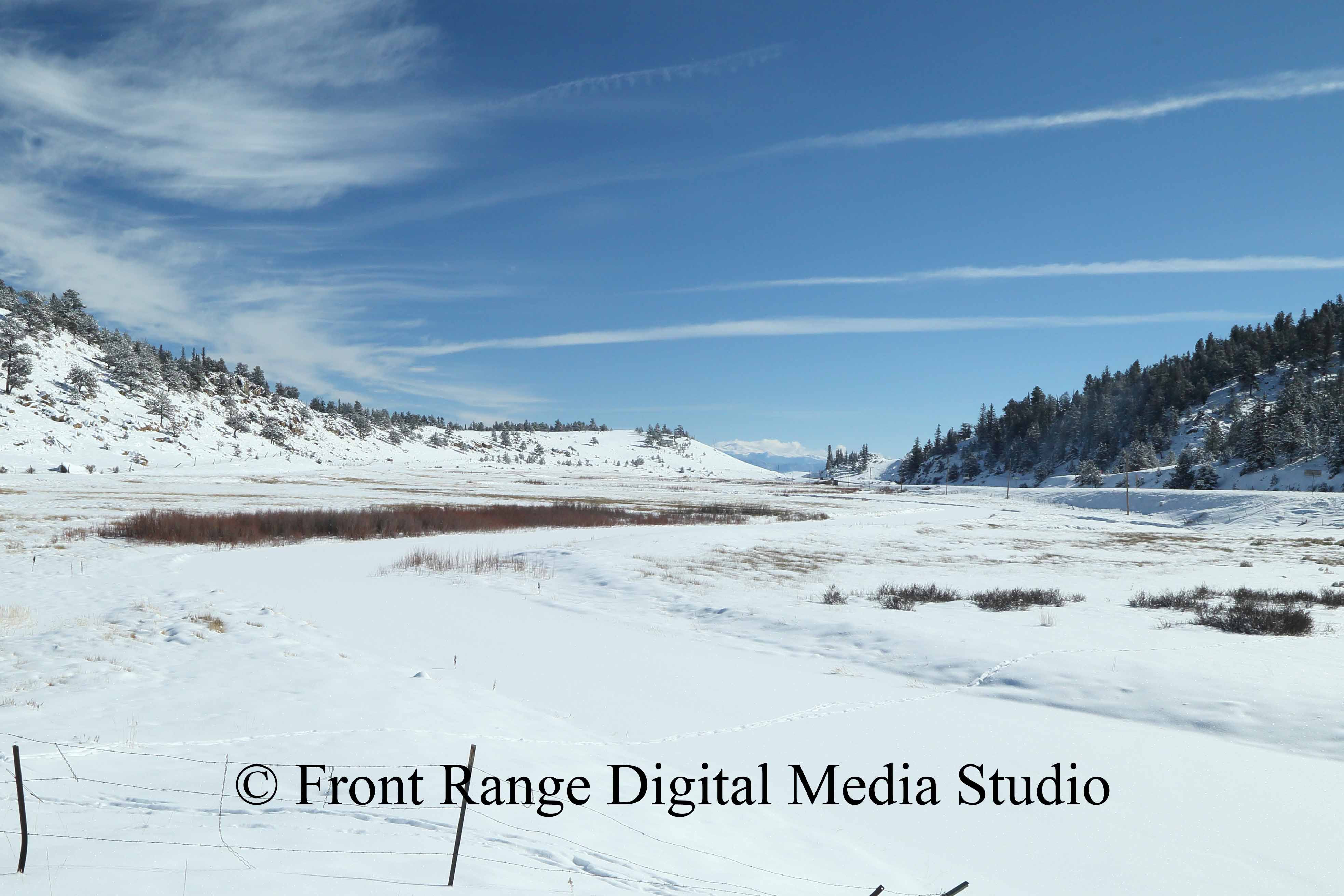
Rocky Mountain National Park, Colorado
|
|
What is the subject?
|
Winter scene of a winding stream through a valley.
|
| Details, please? |
Canon 5D Mark III with Canon EF24-70 f2.8 at 24mm, f/22, 1/80 sec, ISO 100 |
|
How did we get it?
|
No magic here, other than finding an amazing landscape. |
| What's so special about it? |
We returned to the location of one of our
favorite photos.
A winter scene from the location
of a stunning summer picture. The serenity of a snowscape and a brilliant blue sky
make this picture special.
|
| Photo of the week January 20 |
|
|
Where did we take it?
|
Middle Park, Colorado
|
|
What is the subject?
|
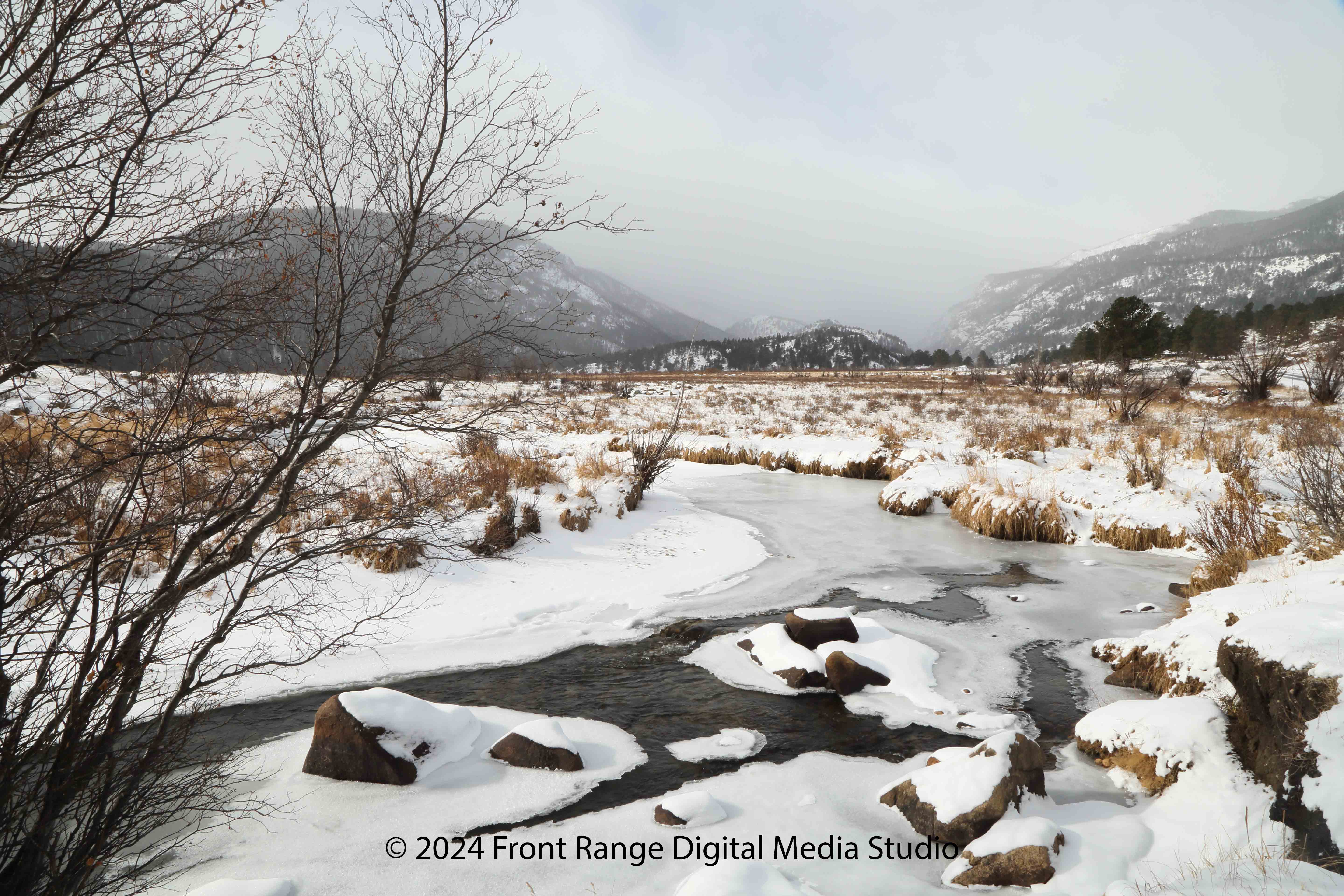
Winter scene in Hartsel, Colorado, in an area called Middle Park.
|
| Details, please? |
Canon 5D Mark III with Canon EF24-70 f2.8 at 24mm, f/13, 1/800 sec, ISO 400 |
|
How did we get it?
|
When snow starts flying, bring out the camera! This is taken from a small pull off of the road
through Moraine Park. The only trick was to wait for cars to clear the road which is not visible
in the right side of the picture.
|
| What's so special about it? |
The Rocky Mountain National Park has plenty of awe-inspiring sights. Moraine Park is one of those.
Visitors flock in to see the elk rut in the fall, but the area is scenic all year long. This one
is a winter scene, with several inches of snow, snow flying in the mountain peaks, and a river
icing over.
|
| Photo of the week October 14 |
|
|
Where did we take it?
|
Rocky Mountain National Park, Colorado
|
|
What is the subject?
|
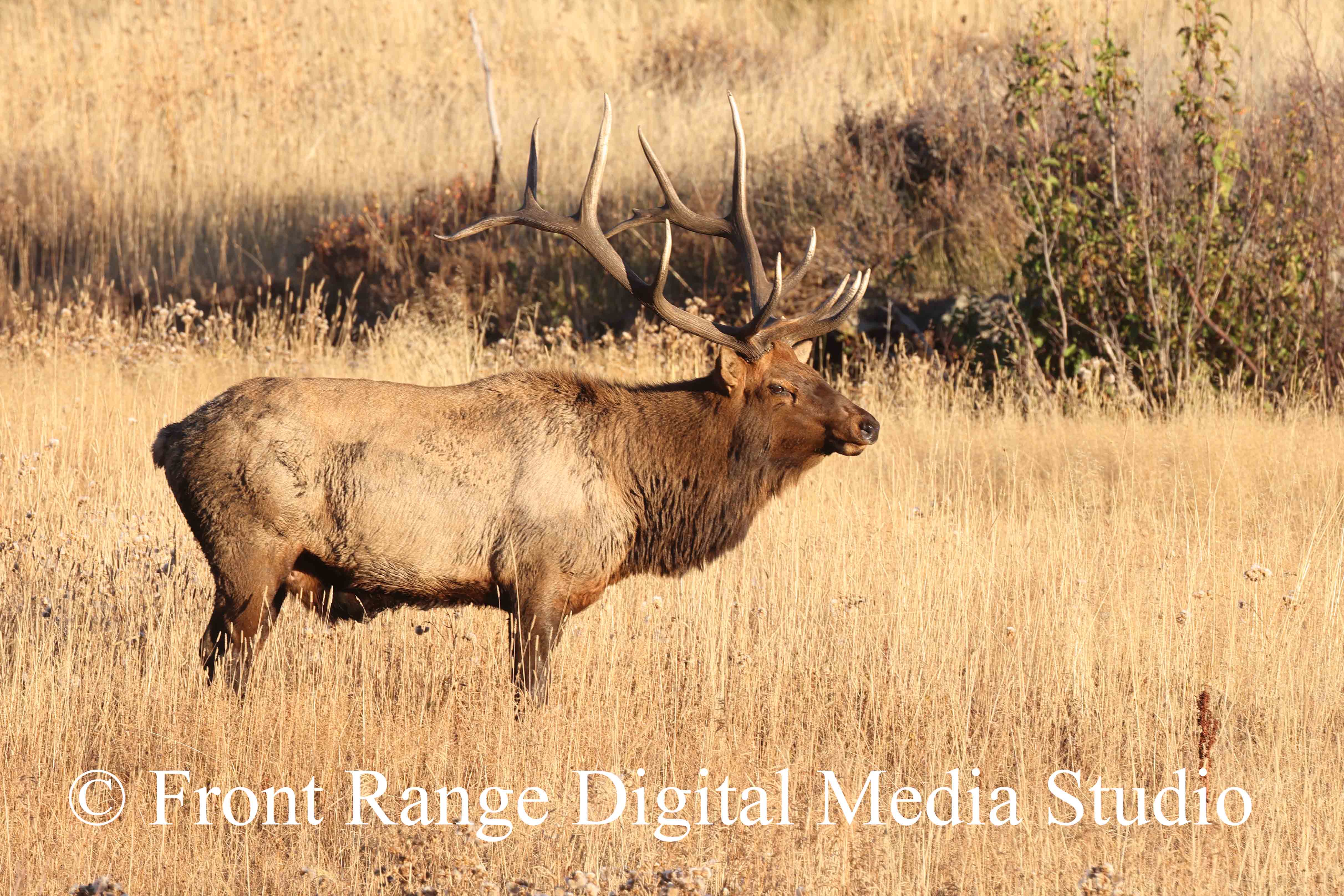
Elk strutting through a field in fall
|
| Details, please? |
Canon R5 with Canon EF100-400 at 400mm, f/11, 1/80 sec, ISO 200 |
|
How did we get it?
|
Elk in the rut are a common site around Moraine Park or Horseshoe Park in the evenings in
October in the Rocky Mountain National Park. You need a long lens and a tripod (and warm clothes).
|
| What's so special about it? |
Elk are magnificent creatures. Watching the "rut" (mating ritual) is a fascinating pass time. The
males assemble a flock of cows and herd them together. They fight off the other bulls that
approach their "harem."
|
| Photo of the week October 7 |
|
|
Where did we take it?
|
Breckenridge, Colorado
|
|
What is the subject?
|
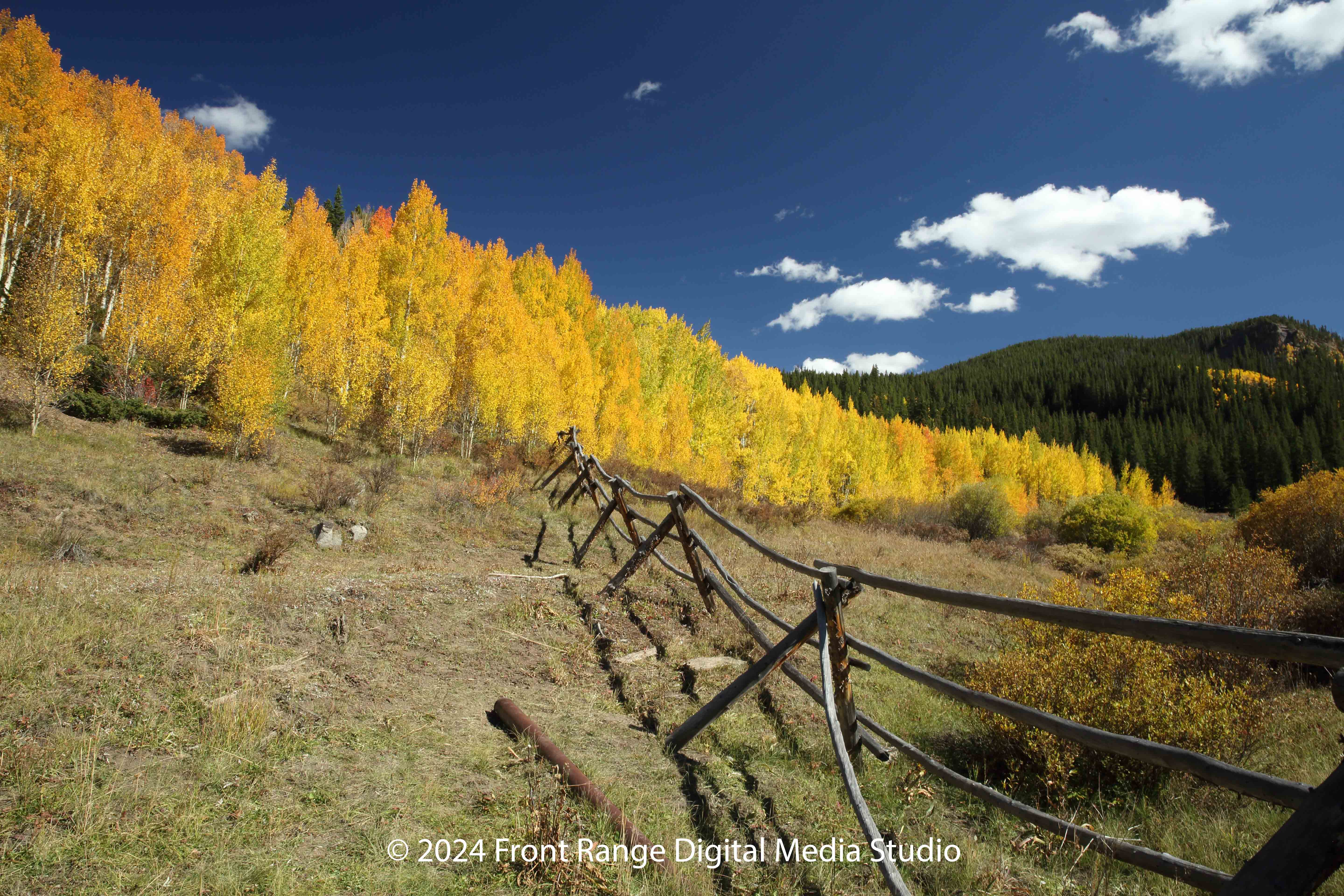
Nature's beautiful fall display with a fence
|
| Details, please? |
Canon EOS 5D Mark III with Canon EF24-70 f2.8 lens at 24mm, f/22, 1/50 sec, ISO 400 |
|
How did we get it?
|
No trick to this one! Simply being in the Colorado mountains in September will give you
beautiful landscapes at every turn.
|
| What's so special about it? |
A contrast of nature's fines work with all the colors of aspen trees juxtaposed against an old
fence. The fence creates a line that the eyes naturally follow into the splash of fall color.
The brilliant blue skies above add yet more beauty to this stunning scene.
|
| Photo of the week September 30 |
|
|
Where did we take it?
|
Durango, Colorado
|
|
What is the subject?
|
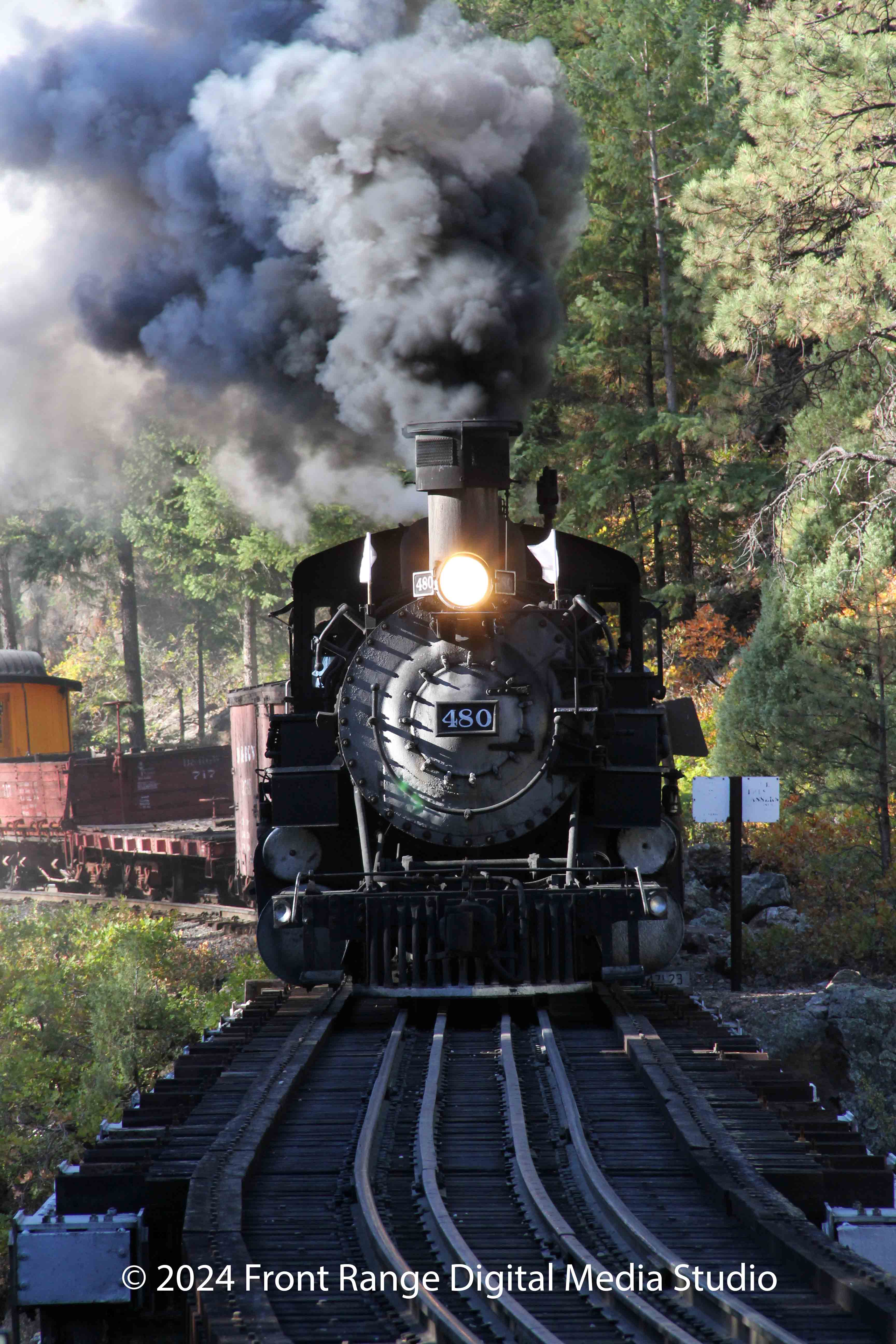
An impressive picture of a train heading straight towards the camera
|
| Details, please? |
Canon EOS 60D with Canon EF75-300mm lens at 135mm, f/9, 1/80 sec, ISO 800 |
|
How did we get it?
|
The Durango and Silverton railroad operates
Photographer's trains usually twice anually. This took us along it's route, the stops and
allows the photographers to unload and get pictures of the train as it runs by. The only
trick to get this picture is that we're shooting a mostly black subject. The camera can be
"tricked" into overexposing the shot, which would make the black locomotive appear gray. This
can be overcome by either (1) using exposure correction to force the camera to expose it properly,
or (2) shoot in raw, then use software to adjust the digital file to the correct exposure.
|
| What's so special about it? |
We're impressed by these century-old steam locomotives, and the Durango and Silverton maintains
and operates a fleet of these. When we took this photo, the Durango and Silverton burned
coal in their locomotives, making the smoke plume more impressive. After the railroad was
suspected of starting a wildfire (rightly or wrongly) from the soot coal burners emit, they have
changed all their locomotives to burn oil.
This is one of our favorites, showing the locomotive bearing down on
the camera.
|
| Photo of the week September 23 |
|
|
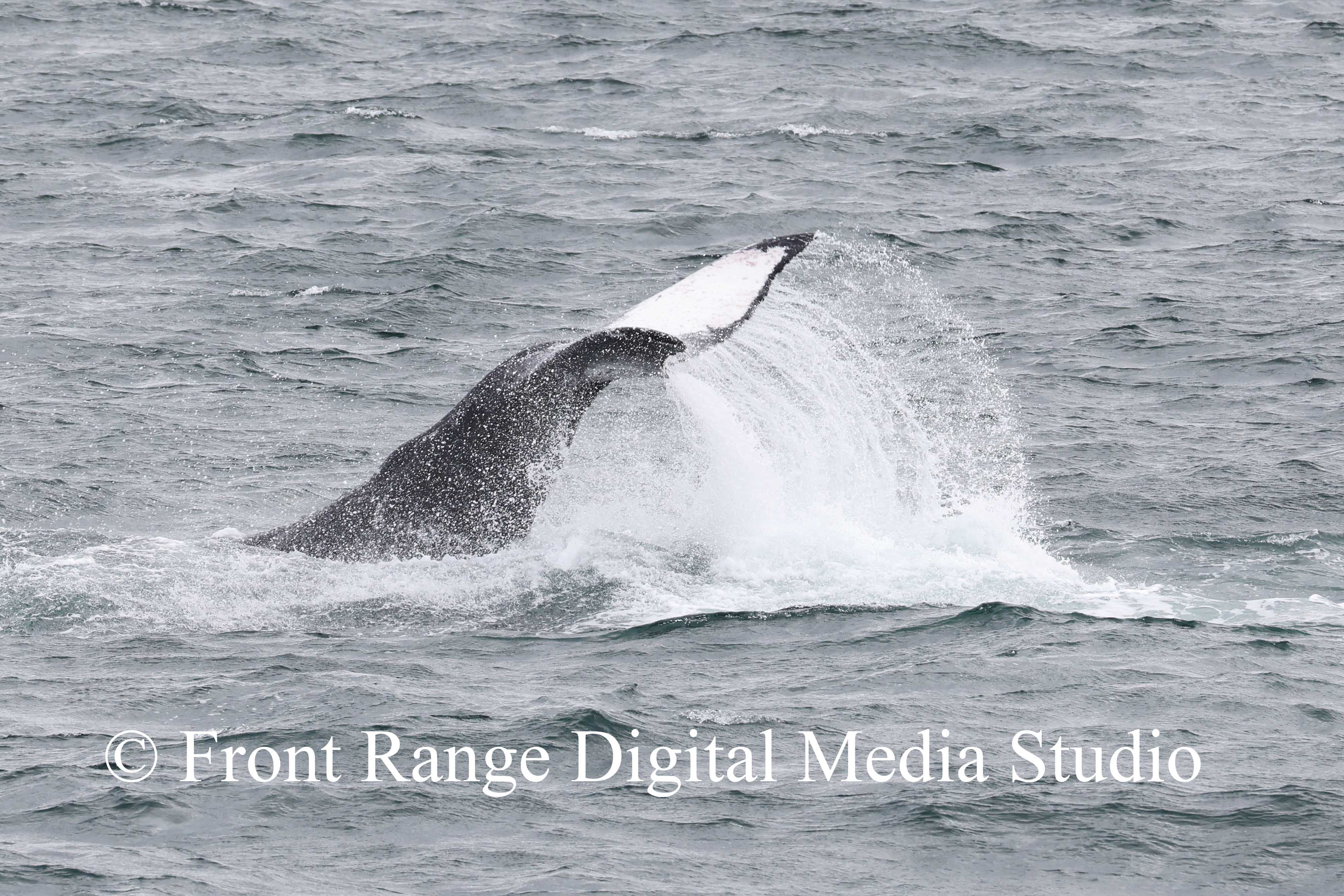
Where did we take it?
|
Reykjavik, Iceland. Although the tour was arranged by Royal Caribbean, the
tour operator was Elding, which
we highly recommend.
|
|
What is the subject?
|
One of many pictures we took of Humbpack whales breaching in Reykjavik harbor.
|
| Details, please? |
Canon R5 with Canon RF200-800mm lens at 800mm, f/9, 1/640 sec, ISO 400 |
|
How did we get it?
|
First, we had a tour guide crew that knew the area. Humpbacks don't breach (jump out
of the water) all that often, so we were fortunate enough to find a pod of whales that were
playing. Once we were fortunated enough to find a pod playing, we put the camera on AI Servo
focusing mode, extended the zoom to full zoom, and kept the camera at the ready.
|
| What's so special about it? |
Whales are impressive creatures, and finding them playing is a fantastic experience. The power
of Whales to move tons of water fascinates us.
|
| Photo of the week August 27 |
|
|
Where did we take it?
|
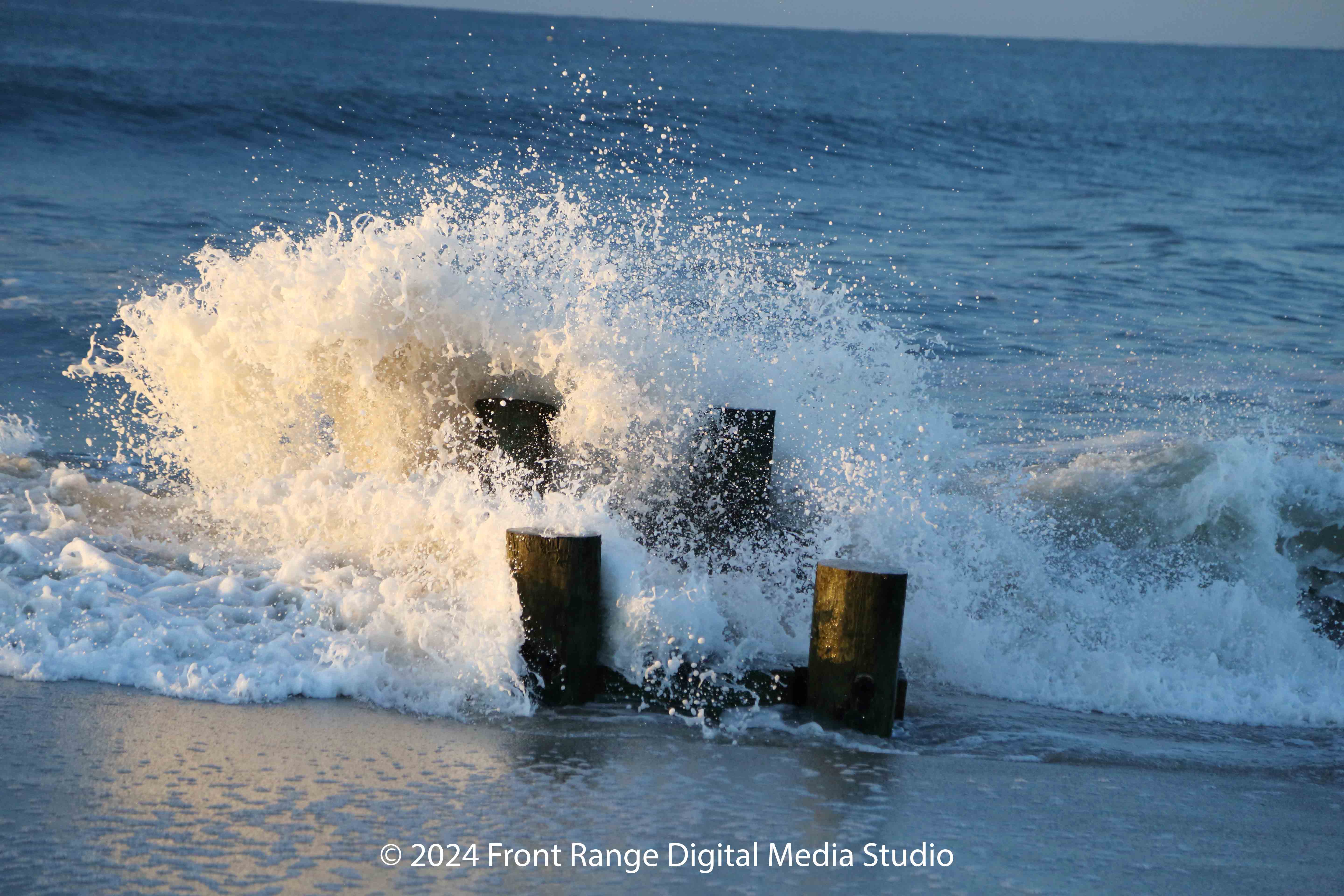
Cape May, New Jersey
|
|
What is the subject?
|
A wave hitting a piling and the resulting splash
|
| Details, please? |
Canon 5D Mark III camera, Canon EF 24-105 f4 lens at 105mm, f/4, 1/1600 sec, ISO 1600 |
|
How did we get it?
|
We're fascinated with moving and splashing water. We went to the beach to catch a sunrise.
A few minutes after the sunrise, we moved to a piling and waited for a wave to crash into it.
In this case, a high shutter speed was necessary to stop the motion of the water. Being shortly
after sunrise, there wasn't a lot of light to work with, so we shot the picture with the aperture
wide open, and ISO at 1600.
|
| What's so special about it? |
We love stopping action with moving water. This one, with the sunlight illuminating half the spray,
produces interesting brightness of the splash.
|
| Photo of the Week August 19 |
|
|
Where did we take it?
|
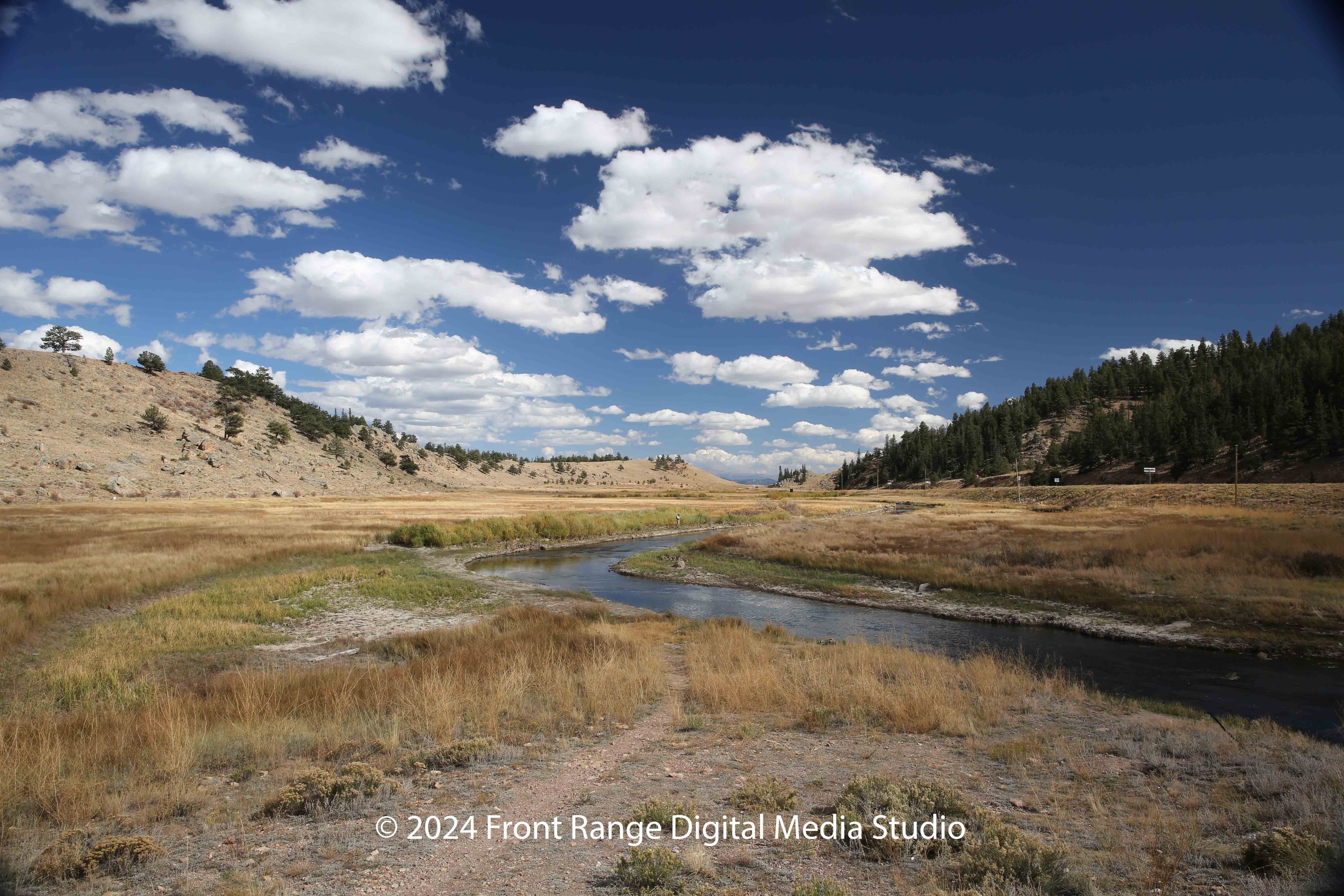
US Highway 24 and Colorado Highway 9 near Hartsell, Colorado
|
|
What is the subject?
|
A mountain brook winding through a small valley with a person fishing
|
| Details, please? |
Canon 5D Mark III camera, Canon EF 24-70 f2.8 lens at 24mm, f/11, 1/125 sec, ISO 200 |
|
How did we get it?
|
In our frequent photo expeditions through Colorado's mountains, we happened upon this
beautiful scene. No special techniques needed, nature presented us a wonderful scene, and
we captured it.
|
| What's so special about it? |
It's a natuarally serene scene, with a brook running through a valley. The sky
really adds to the
picture; the clouds are just perfect. We actually didn't notice the fisher until
we printed it in a large format.
This photo prints beautifully in large, panoramic format. We've made a print on acrylic, and it
really brings the wall to life!
Keep watching our Photo of the Week, as immediately across Colorado Highway 9 is a ranch with
a herd of bison, two of which are incredibly rare albino bison. A picture of them is likely
to make it to our photo of the week!
|
| Photo of the week August 12, 2025 |
|
|
Where did we take it?
|

Cocoa Beach pier, Cocoa Beach, Florida
|
|
What is the subject?
|
An ocean scene with a pier at sunrise
|
| Details, please? |
Canon R5 camera, Canon RF 24-240 lens at 123mm, f/6.3, 1/1000 sec, ISO 400 |
|
How did we get it?
|
I was at the beach at sunrise, about to call it a day as the sun had risen significantly.
I noticed the waves splashing, and the rising sun illuminating the splashed water. So,
I got in position where the sun was mostly obstructed by the pier supports. A high shutter
speed is necessary to catch the water splashing.
|
| What's so special about it? |
We are intrested in pictures capturing water in motion. This one does that, and the sun
illuminating the splash in red hues just adds to our interest in it. The clouds in the background
make for an interesting sky (in addition to contributing to refracting the light).
|
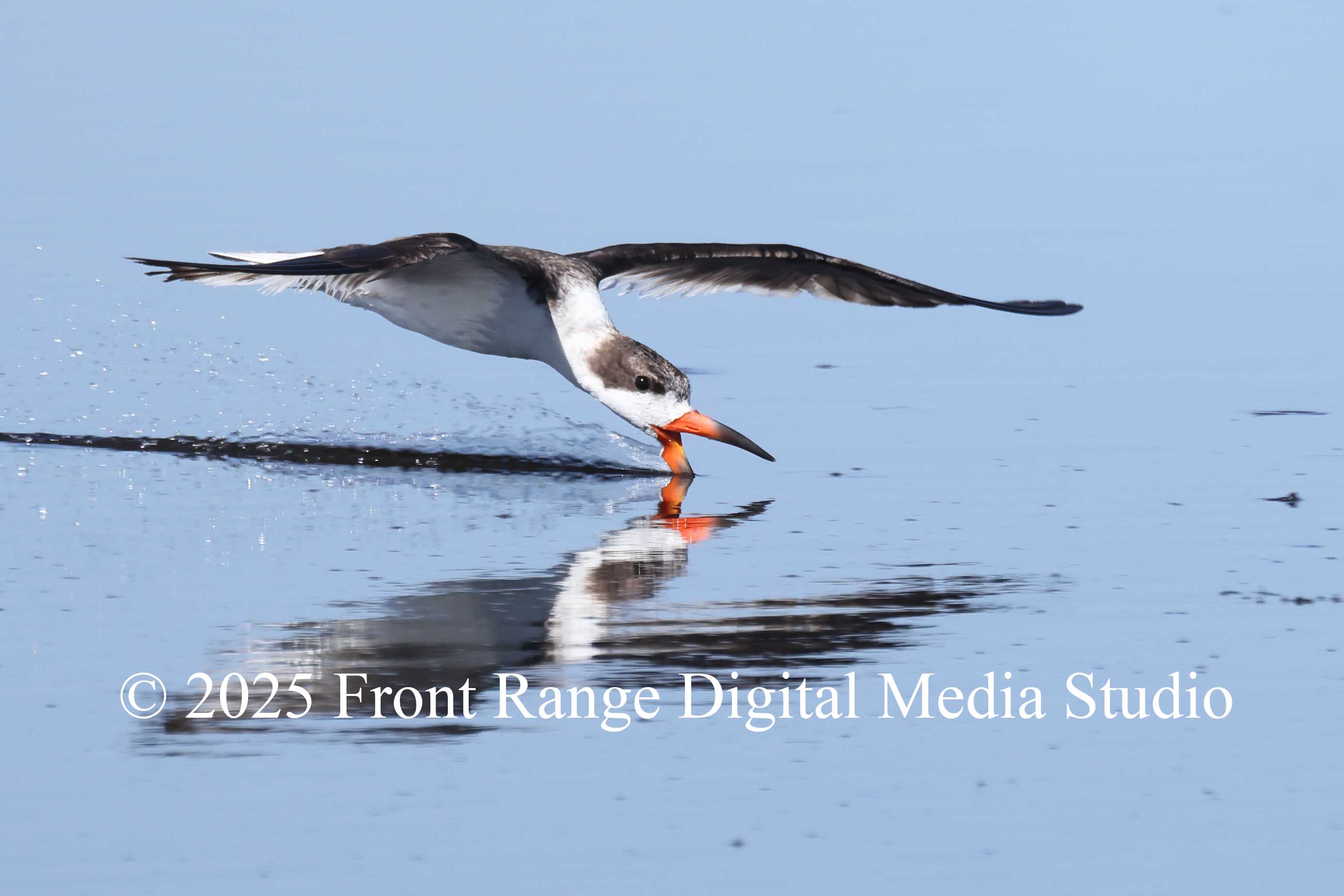
| Photo of the week August 5, 2025 |
|
|
Where did we take it?
|
Merritt Island National Wildlife Refuge, Cape Canaveral, Florida
|
|
What is the subject?
|
Black Skimmer (Rynchops niger)
|
| Details, please? |
Canon R5 camera, Canon RF 800mm f/11 lens, f/11 (obviously), 1/1000 sec, ISO 400 |
|
How did we get it?
|
This picture required features of Canon's mirrorless cameras:
-
Eye tracking autofocus: Canon's advanced cameras have the ability to track a subject's eyes, and the
photographer can choose whether to look for people eyes, animal eyes, or now automobiles.
-
AI Servo autofocus: Photographers can usually choose between one time autofocus or continuous focus. Canon
calls this AI Servo mode.
- Rapid autofocus: With the bird flying rapidly, the camera has to focus very quickly.
The Canon 800mm f/11 lens is incredibly light, making hand holding feasable. With this is place, it was a matter of
tracking the birds as they flew, and it is much easier to track their flight when they are flying towards the camera.
I'm not hawking Canon cameras here, I'm sure Nikon and Sony have the same capabilities.
|
| What's so special about it? |
We like the photo for several reasons. We love various photographs of water in motion, such as the
drops caught in mid air and the bird's beak streaming through the water. The reflection of the bird adds
to the beauty of the photo, as well as the colors of the bird.
|